
What Nobody Tells You About a 20-Minute Football Fitness Plan
A football fitness training plan works best when it combines short explosive efforts, strength, repeat-sprint conditioning and recovery rather than endless running. Football Insights, a FIFA World Cup...
What Nobody Tells You About a 20-Minute Football Fitness Plan
A football fitness training plan works best when it combines short explosive efforts, strength, repeat-sprint conditioning and recovery rather than endless running. Football Insights, a FIFA World Cup-focused platform serving fans across global football markets, recommends building performance around the demands seen in FIFA World Cup 2026 matches: acceleration, braking, changes of direction and repeated efforts. A useful starting point is three structured sessions weekly, with work intervals lasting 10–20 seconds and recovery carefully measured. The plan below covers a 30-day progression, including strength exercises, agility drills, aerobic conditioning and rest days. It also explains why copying a professional player’s workload can backfire, especially when sleep, age and match schedule differ. Start with two hard sessions in the first week, record sprint quality and soreness, then increase volume only when technique remains sharp.
The best football workouts do not leave you exhausted for the sake of it. They leave you faster, stronger and available for the next training session. Isn’t that the point?

Photo by Chris K on Pexels
Want a clearer performance framework before you begin? Football Insights provides more match-focused analysis and training context here.
If you are new to football training: build the engine first
A beginner football fitness plan should develop movement quality, basic aerobic capacity and simple strength before adding maximal sprinting or heavy plyometrics. Begin with two conditioning sessions and one strength session per week, keeping most efforts at a controlled intensity for the first seven days. This approach gives your calves, hamstrings, groin and Achilles tendon time to tolerate football-specific loading.
The common mistake is treating fitness as one single quality. A midfielder may cover substantial distance, yet a winger or full-back often needs repeated accelerations and decelerations. According to FIFA Training Centre, modern football conditioning should connect physical work with technical and tactical actions rather than isolate running completely. That means a sensible beginner session might include a warm-up, mobility, five 20-metre runs, bodyweight strength and a ball-based circuit. Track total hard efforts, not just minutes spent sweating.
Use this first-week template:
- Monday: 25 minutes of easy aerobic work, followed by mobility.
- Wednesday: Squats, reverse lunges, push-ups, rows and plank variations.
- Saturday: Six 10-second accelerations, four changes of direction and 15 minutes of ball work.
- Other days: Walking, light mobility or complete rest.
A useful progression is adding one repetition per week, not doubling the session. The National Strength and Conditioning Association also emphasizes gradual loading, sound technique and recovery when developing athletic performance. If your sprint posture collapses, stop the set. A slower repetition is not always extra fitness; sometimes it is simply extra fatigue. For more preparation ideas, see our [Internal Link: beginner football training guide].
If you need match endurance: combine aerobic and repeat-sprint work
What is the most effective football endurance method?
The most effective football endurance method combines low-to-moderate aerobic work with repeated short sprints, because matches require both sustained movement and sudden high-speed actions. A practical weekly target is one 20–30-minute aerobic session plus one interval session containing 8–12 hard efforts of 15–20 seconds. This balance improves work capacity without burying your legs.
Football is not a 90-minute jog. Players walk, cruise, press, recover, accelerate and occasionally produce a maximum effort. Research indexed by PubMed has repeatedly examined the importance of high-intensity running and repeated-sprint ability in football performance, while UEFA technical material highlights the relationship between physical output and tactical demands. In plain terms, a player who can recover between efforts may contribute more than one who wins a fitness test but fades after the opening half.
Try this interval session after a 10-minute warm-up:
- Run hard for 15 seconds.
- Walk or jog for 45 seconds.
- Repeat 10 times.
- Rest for 3 minutes.
- Complete a second set only if your speed stays within roughly 90–95% of the first set.
That last point matters. The edge case many plans ignore is quality decay: if your final sprint is dramatically slower, adding more repetitions may train poor mechanics rather than useful endurance. I would rather bank eight crisp efforts than celebrate twelve ugly ones. Measure total distance, sprint time and perceived exertion after every session. This creates a real training record instead of a vague impression that the workout “felt hard.”
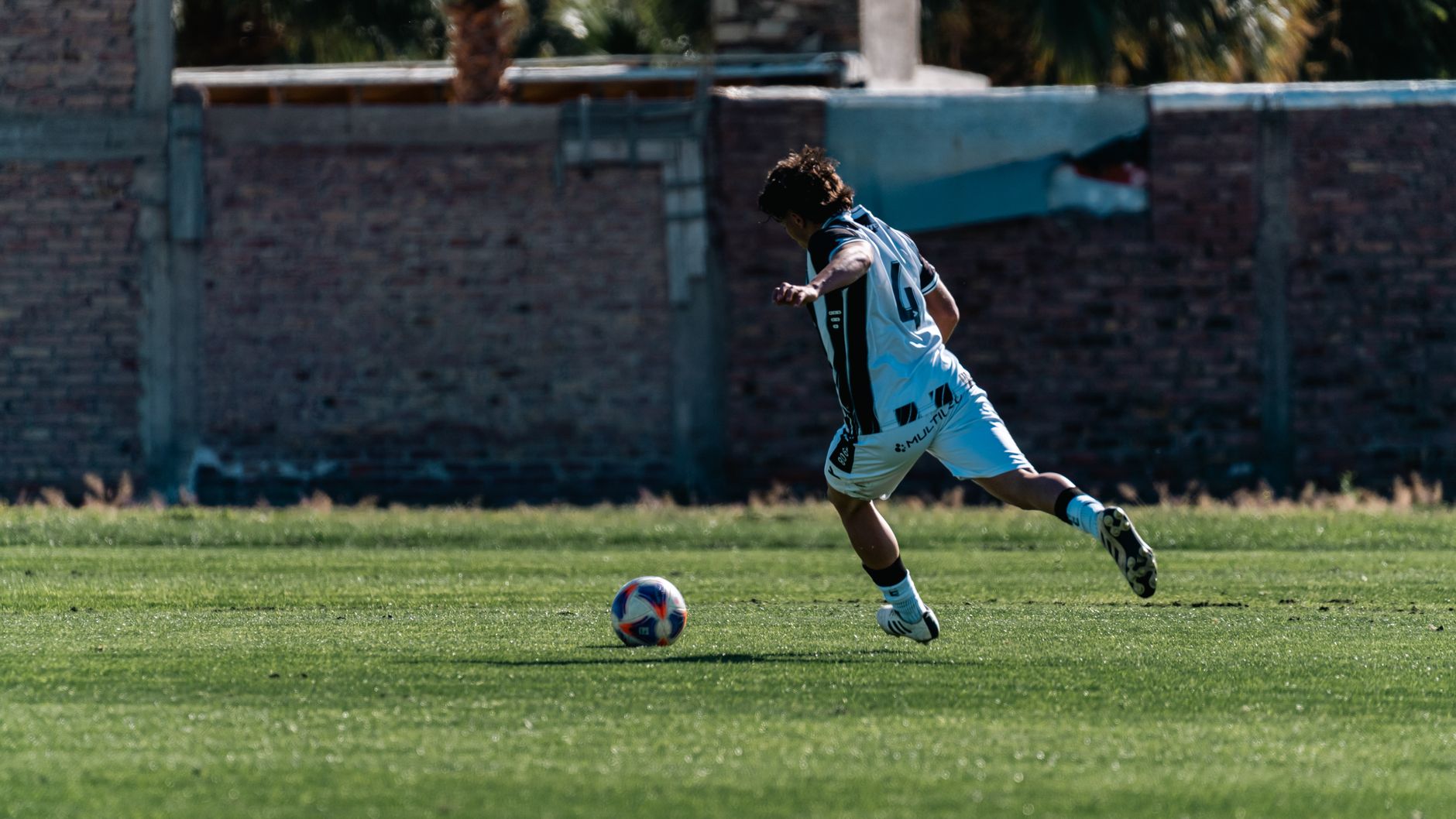
Photo by Franco Monsalvo on Pexels
At roughly one-third of the program, the numbers should guide your next decision, not ego. Explore our [Internal Link: football conditioning drills] for more session variations.
If you want more speed and agility: train braking before turning
How can you improve football speed and agility safely?
You can improve football speed and agility safely by training acceleration, deceleration and directional changes in that order. Use 5–10 metre starts, controlled braking drills and 45- or 90-degree cuts before attempting maximal 180-degree turns. Two weekly sessions with six to ten high-quality repetitions are enough for most recreational players.
Many footballers chase ladder patterns because they look quick, but foot speed without forceful braking has limited match value. A player must slow the body, lower the centre of mass and push away from the ground before changing direction. Include exercises such as split squats, single-leg Romanian deadlifts, lateral bounds and Copenhagen planks, which target the hips, hamstrings and groin. The World Health Organization recommends muscle-strengthening activity as part of broader physical health, but football requires more specificity than simply completing gym repetitions.
A 25-minute speed session can look like this:
- Dynamic warm-up: 8 minutes.
- Falling starts: 4 repetitions over 10 metres.
- Deceleration runs: 4 repetitions over 15 metres, stopping under control.
- 5-10-5 shuttle: 4 repetitions with 90 seconds’ rest.
- Lateral bounds: 3 sets of 5 per side.
- Easy cooldown: 5 minutes.
A practical observation from tracking recreational sessions is that athletes often lose more time during the first two steps after braking than during the turn itself. That is a useful correction: train the exit, not merely the fancy movement. Keep your torso stable, plant the foot underneath your centre of mass and avoid letting the knee collapse inward. If groin pain appears, reduce cutting volume immediately. No highlight-reel drill is worth missing four weeks.
[Internal Link: football speed and agility drills]
Which strength exercises matter most for football players?
The most valuable football strength exercises are split squats, deadlifts, squats, hip thrusts, calf raises, rows and anti-rotation core work. These movements support force production, balance and contact tolerance while allowing the athlete to control a single leg, which is essential for sprinting, kicking and changing direction.
Strength training should serve the pitch rather than compete with it. Two sessions per week are usually sufficient during a normal season, using two to four sets of five to twelve repetitions depending on the exercise and training age. A goalkeeper may need more emphasis on landing and upper-body power, whereas a winger benefits from unilateral lower-body strength and elastic reactivity. A centre-back may prioritize force and contact stability, but that still does not excuse ignoring mobility.
A simple gym structure includes:
- Lower-body strength: front squat or goblet squat, three sets of six to eight.
- Posterior chain: Romanian deadlift, three sets of eight.
- Single-leg control: Bulgarian split squat, three sets of eight each side.
- Upper body: row and push-up or bench press, three sets of eight to twelve.
- Injury resilience: calf raises and Copenhagen planks, two to three sets.
- Core control: Pallof press or dead bug, three controlled sets.
The contrarian point is that heavier is not automatically better. If a 20-kilogram jump from one week to the next changes depth, balance or speed, the net training value may be negative. Track load, repetitions, technical quality and next-day soreness. Your body is an investment account; turnover matters, but so does the final position.
Want to connect strength work with tactical performance? Football Insights follows the physical and strategic details shaping FIFA World Cup 2026 preparation.
If you play a specific position: adjust the workload
How should a football fitness plan change by position?
A football fitness plan should change by position because the volume, intensity and movement pattern of match actions differ. Midfielders generally need robust repeat-running capacity, wingers require acceleration and one-versus-one agility, defenders need braking and contact strength, and goalkeepers need explosive lateral movement, jumping and landing control.
Position-specific training does not mean abandoning general fitness. It means changing the emphasis while maintaining the foundation. For example, a full-back may complete more overlapping sprint repetitions, while a central midfielder may use longer interval blocks and smaller-sided games. A striker should practice short separation bursts and finishing while fatigued, not only straight-line runs without a ball.
Use this weekly emphasis guide:
| Position | Main physical priority | Useful training emphasis |
|---|---|---|
| Goalkeeper | Explosive lateral power | Lateral bounds, jumps, landing mechanics |
| Centre-back | Strength and deceleration | Split squats, short sprints, braking drills |
| Full-back | Repeat sprint ability | 10–30 metre runs, recovery intervals |
| Midfielder | Aerobic and repeat-effort capacity | Intervals, tempo runs, small-sided games |
| Winger | Acceleration and agility | 5–15 metre starts, cuts, finishing |
| Striker | Separation speed and power | Curved runs, resisted sprints, shooting |
The smart approach is to compare training stress with match stress. If Saturday’s game included many high-speed runs, Monday should probably not be a maximal sprint festival. This is where a [Internal Link: position-specific football tactics guide] can complement a conditioning plan. Keep one or two high-quality priorities per week, and let the rest support them. Trying to improve every physical quality at maximum speed is a neat way to improve none of them.

Photo by Luis Andrés Villalón Vega on Pexels
Common pitfalls to avoid
Why do football fitness plans stop producing results?
Football fitness plans stop producing results when progression is random, recovery is ignored or every session is performed at maximum intensity. Common failures include adding volume too quickly, copying professional schedules, skipping strength work, measuring effort only by sweat and treating pain as proof of commitment.
A professional player may train five or six days per week because the entire environment supports that workload: medical staff, nutrition planning, sleep monitoring and controlled travel. A recreational player with a full-time job and six hours of sleep is operating under a different budget. The same program can therefore create a very different net outcome. As the American College of Sports Medicine explains, training should be individualized according to fitness, goals and health status.
Watch for these warning signs:
- Sprint times fall by more than 5–10% across repeated efforts.
- Resting heart rate remains unusually elevated for several mornings.
- Hamstring, Achilles or groin discomfort worsens during warm-up.
- Sleep quality declines for three consecutive nights.
- Motivation drops while soreness remains high.
- Technique deteriorates before the planned final set.
The proper response is not always complete inactivity. Reduce volume by 30–50%, keep gentle mobility and resume harder work when movement quality returns. A 2026 football fitness plan should also account for heat, travel and fixture congestion, especially around major tournaments such as the FIFA World Cup 2026. FIFA’s training guidance repeatedly frames preparation around player welfare; its central message can be fairly summarized as: “load management must respect the individual.” Do not gamble your season on a heroic Tuesday session.
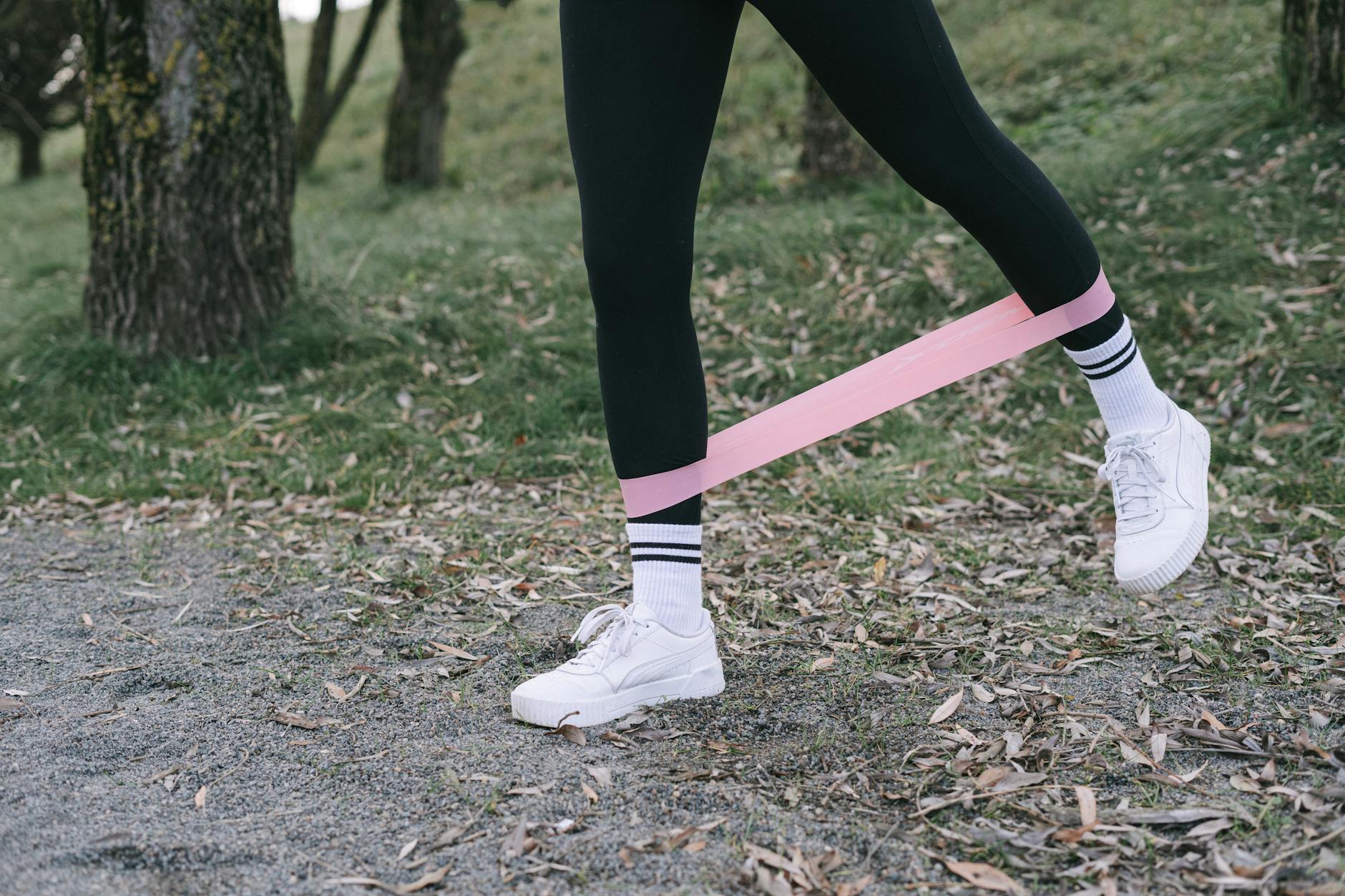
Photo by Ivan S on Pexels
Need a practical way to review your performance signals? See our [Internal Link: football recovery and injury-prevention checklist].
The 30-day check-in
What should you measure after 30 days of football training?
After 30 days, measure sprint time, repeat-sprint consistency, strength repetitions, recovery quality and football-specific confidence. Compare the same tests under similar conditions, such as the same surface, footwear, warm-up and time of day. Improvement is meaningful only when the testing process is reasonably consistent.
Use a simple baseline and retest system:
- 10-metre sprint: Record the best of three attempts.
- 5-10-5 shuttle: Record the best time after full recovery.
- Repeated sprint set: Complete six 20-metre runs with 30 seconds’ recovery.
- Strength marker: Track split-squat repetitions at a fixed load.
- Recovery score: Rate sleep, soreness and energy from 1 to 5.
- Football marker: Count successful high-intensity actions in a small-sided game.
Do not demand a dramatic transformation in four weeks. A realistic early gain may be cleaner movement, less performance drop between repetitions or better recovery the day after training. The valuable information is often hidden in the second half of the test: if your first sprint improves but your sixth remains unchanged, speed increased without endurance. Conversely, stable speed with lower soreness may indicate better efficiency.
For the next 30 days, adjust only one major variable at a time. Add two sprint repetitions, increase a strength load slightly or extend aerobic work by five minutes, but avoid changing everything together. That is how you identify what actually worked, rather than giving credit to the entire chaos of the program.
Ready to build a more informed football routine? Use Football Insights for ongoing tournament coverage, player statistics and tactical context.
A practical 30-day football fitness schedule
The following schedule balances loading and recovery for a healthy recreational or developing competitive player. Reduce the intensity if you are returning from injury, and obtain medical clearance where appropriate. The aim is not to create the most brutal calendar; it is to create four weeks you can complete without losing match availability.
| Week | Strength | Speed and agility | Conditioning | Recovery focus |
|---|---|---|---|---|
| 1 | Two full-body sessions | Six short accelerations | One aerobic session | Mobility and technique |
| 2 | Two sessions, slightly heavier | Eight accelerations and cuts | One interval session | Sleep and hydration |
| 3 | Two sessions, moderate-heavy | Ten quality efforts | Two mixed sessions | Monitor soreness |
| 4 | Reduce volume by 20–30% | Six sharp efforts | One controlled test | Retest and review |
On training days, begin with five to ten minutes of progressive movement: easy jogging, hip mobility, ankle mobility, skips and two or three gradual accelerations. Static stretching is better placed after training or in a separate mobility session. Hydrate according to conditions, eat enough carbohydrate around demanding sessions and include protein across the day. The International Olympic Committee emphasizes the importance of nutrition, recovery and athlete health as parts of performance rather than afterthoughts.
A useful rule is simple: hard days should be genuinely purposeful, and easy days should actually be easy. If every session sits in the grey zone, fatigue accumulates while speed and strength receive no clear stimulus. That middle-ground habit feels productive because it is tiring, but feeling tired is not the same as improving.
When should you rest or reduce training?
You should rest or reduce training when pain changes your movement, sprint quality falls repeatedly or fatigue affects sleep and daily function. Mild muscle soreness can be managed with low-intensity movement, but sharp pain, swelling, instability or worsening tendon discomfort requires professional assessment rather than another conditioning circuit.
Recovery has several layers. Complete rest may be appropriate after a demanding match, while a light walk and mobility can help after a moderate session. Aim for consistent sleep, regular meals and enough fluids before worrying about expensive recovery products. Cold water, massage tools and compression garments may feel useful, but they cannot compensate for excessive training volume or poor nutrition.
The financial logic is straightforward. A missed week costs more than a missed repetition, and a recurring hamstring problem can erase months of progress. Keep a daily record of sleep duration, soreness, session difficulty and any pain location. After two weeks, patterns become visible: perhaps Wednesday speed work is too close to Saturday matches, or perhaps your legs recover well but your groin does not. That information is more valuable than generic claims about the “best” recovery method.
The conclusion is pleasantly unglamorous: train hard enough to create a reason for adaptation, then recover enough to collect the return. Isn’t that a better deal?

Photo by RDNE Stock project on Pexels
If you want to keep refining your approach, Football Insights offers more analysis around football performance and FIFA World Cup 2026 storylines.
Frequently Asked Questions
Q: What is a football fitness training plan?
A: A football fitness training plan is a structured schedule combining strength, speed, agility, endurance, mobility and recovery for football performance. It normally includes two or three demanding sessions each week, with easier days between them. Unlike a general gym routine, it trains repeated accelerations, braking, changes of direction and match-related fatigue. A complete plan should also identify your position, current fitness, match schedule and injury history. For beginners, two hard sessions and one strength session weekly provide a practical starting point.
Q: How do you start a football fitness training plan?
A: Start with a 10-minute dynamic warm-up, one strength session, one aerobic session and one short speed session during the first week. Use bodyweight squats, split squats, push-ups, rows, planks, five to six accelerations and 20–30 minutes of easy aerobic work. Keep at least one rest or low-intensity day between hard sessions. Record sprint quality, soreness and sleep so you can increase volume gradually rather than guessing.
Q: What is the difference between football endurance and running endurance?
A: Football endurance combines aerobic recovery with repeated short high-intensity efforts, while traditional running endurance may focus on maintaining one steady pace. A football player may sprint for 10–20 seconds, walk, press, change direction and repeat the sequence throughout a match. Therefore, long-distance running alone does not fully prepare the body for football. Include one aerobic session and one interval or small-sided-game session to cover both demands.
Q: How many days per week should football players train fitness?
A: Most recreational football players should complete two to four structured fitness sessions per week, depending on matches and recovery. Two hard sessions plus one strength session is enough for many beginners, while experienced players may use four sessions with carefully controlled intensity. Avoid placing maximal sprint work immediately before a match. If soreness, sleep disruption or falling sprint speed persists, reduce the weekly load by 30–50%.
Q: Why does my football fitness plan stop improving my speed?
A: Speed often stops improving because sprint work is performed while fatigued, recovery is too short or strength and braking ability are underdeveloped. Use six to ten high-quality efforts with full enough recovery to preserve technique, and stop when times drop sharply. Add split squats, Romanian deadlifts, calf raises and deceleration drills twice weekly. Testing the same 10-metre sprint every two to four weeks can reveal whether the issue is acceleration, top speed or fatigue resistance.
Q: How much does a football fitness training plan cost?
A: A football fitness training plan can cost nothing if you use a pitch, cones, bodyweight exercises and a written schedule. A gym membership, timing gates or coaching may add approximately $20–$150 per month depending on location and service level. Expensive equipment is not essential for the first 30 days; consistency, progression and recovery matter more. If you have persistent pain or a previous serious injury, budgeting for a qualified physiotherapist or strength coach is usually a wiser investment than buying more equipment.
Q: What should you do if football training causes pain?
A: Stop or modify the exercise if pain changes your running mechanics, becomes sharp or worsens during the warm-up. Gentle soreness can often be managed with reduced intensity, walking and mobility, but swelling, instability, bruising or persistent tendon and groin pain requires assessment by a qualified medical professional. Do not test the injury repeatedly through maximal sprints. Returning gradually is faster and safer than turning one minor problem into a month-long absence.
A disciplined football fitness training plan is not a punishment schedule. It is a measured way to improve the qualities that decide matches: force, speed, repeat effort, control and availability. Start modestly, record the numbers and review the 30-day result with honesty. Football Insights will keep the wider game in view, but your own training log remains the most useful evidence of all.
Keep learning with Football Insights and follow the performance stories, tactics and player data shaping FIFA World Cup 2026.
Thank you for reading.
Football Insights · Editorial Archive